
More buyers than ever want that packaging to be kinder to the planet, and the good news is that paper has come a long way. This guide walks through how to plan a festive packaging range that looks the part, holds up under pressure, and helps you cut single-use plastic. From food boxes and cutlery to takeaway and gift packaging, here is what to look for and where to start.
What makes Christmas packaging genuinely sustainable
Plenty of packaging carries a green label. A few simple checks tell you whether it holds up.
- Made mostly from paper and board: Renewable fibre is the foundation. It is easy to recycle and widely accepted in paper waste streams.
- PFAS-free: No forever chemicals in the parts that touch food.
- Designed for recycling and recovery: The packaging should fit the systems your customers already use, not need a special route to be dealt with responsibly.
- Fit for the job: Sustainable only counts if the box still holds the meal and the cutlery still cuts. Strength and heat resistance matter as much as the look.
Paper packaging needs a very thin barrier to hold liquid and grease, so a tiny amount of coating is normal. What really matters is how little plastic it needs. A typical plastic-lined cup can sit around 5 to 10 percent plastic, while our double-walled paper cup brings that down to roughly 0.6 percent, and certain MAP food box models cut the plastic of conventional packaging by 72 to 88 percent. That barrier is not a stubborn plastic lining. It dissolves cleanly when the packaging is composted or repulped, so the clean fibres can be recovered and used again. The honest way to describe this is that it helps you cut single-use plastic by a wide margin, not that it removes every trace of it, and that is a claim your customers can rely on.
Festive packaging ideas across the range
A good festive range is more than one hero product. Here is how the pieces fit together across a typical food and drink operation.
Christmas is one gathering after another: office parties, family get-togethers, club dinners and festive markets. You can dress the whole table from one place, from napkins and paper plates to cups, cutlery, food boxes and even a pizza box. It keeps the look consistent across the celebration, and when the party winds down the disposables go straight in the recycling, so there is no fuss and no clean up. One order, one supplier, the whole festive range.
Food boxes for seasonal menus and gifting
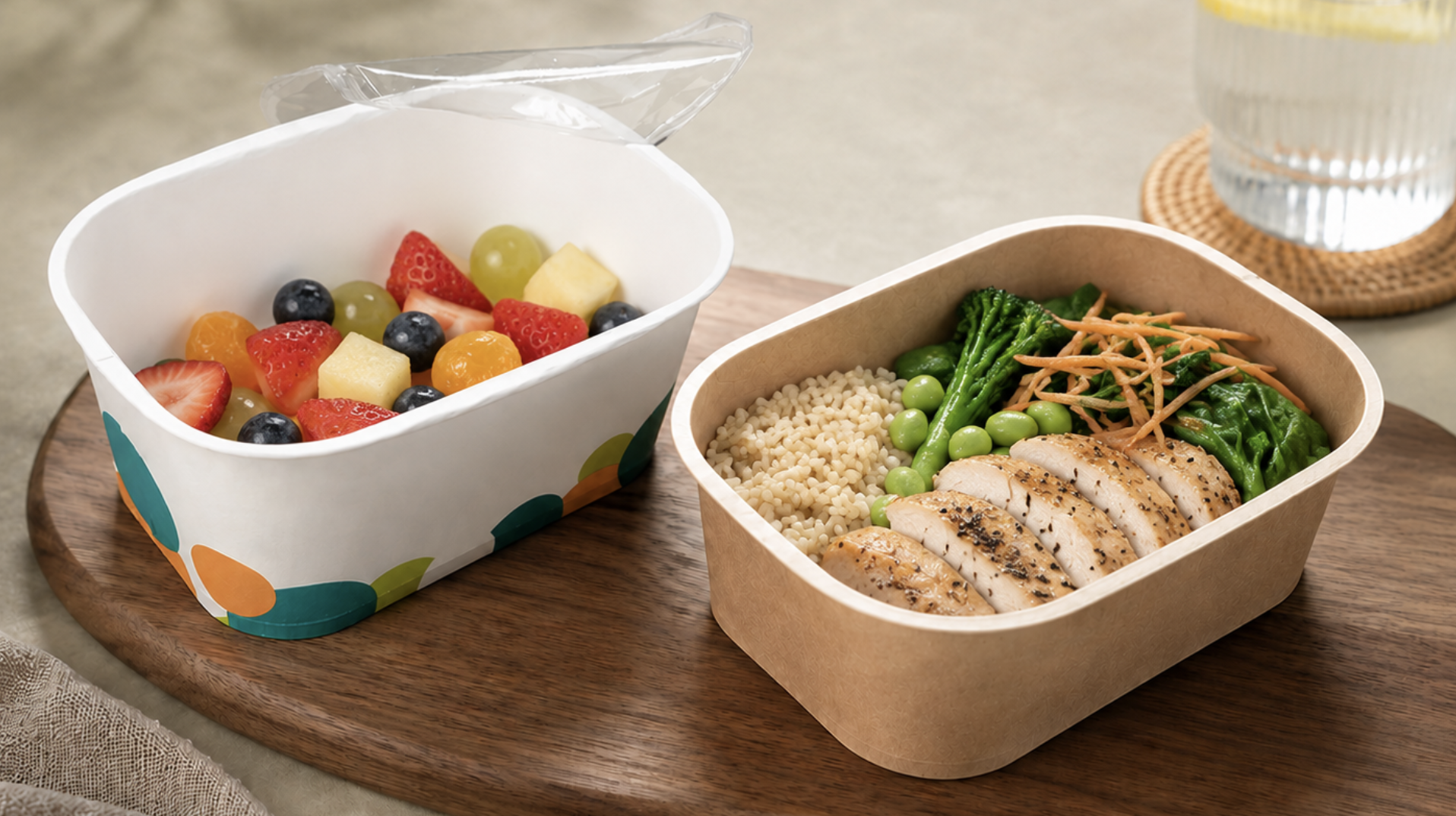
The food box is the workhorse of the season. It carries everything from a festive burger to a hot Christmas market meal to a boxed-up gift set. The MAP Food Box is built for this: modified atmosphere packaging keeps food fresher for longer and holds its seal with no leaks, so a meal travels well and looks good when it is opened. It is microwave safe too, so a customer can heat it straight from the box. For retailers, a sturdy, good-looking box doubles as gift packaging without any extra work. Fresher for longer also means less food going to waste, which is part of the same goal.
Cutlery and service sets for parties and gatherings
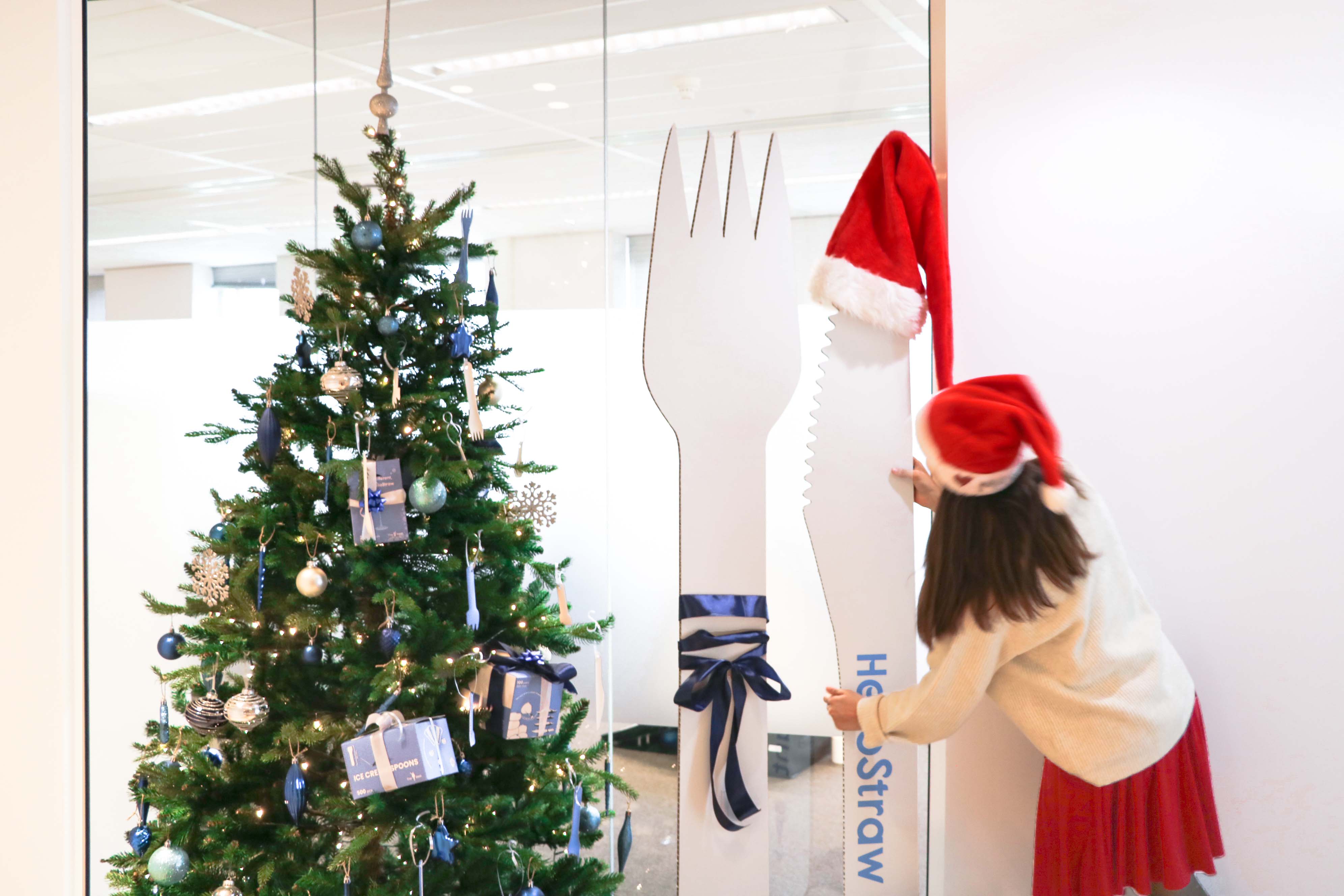
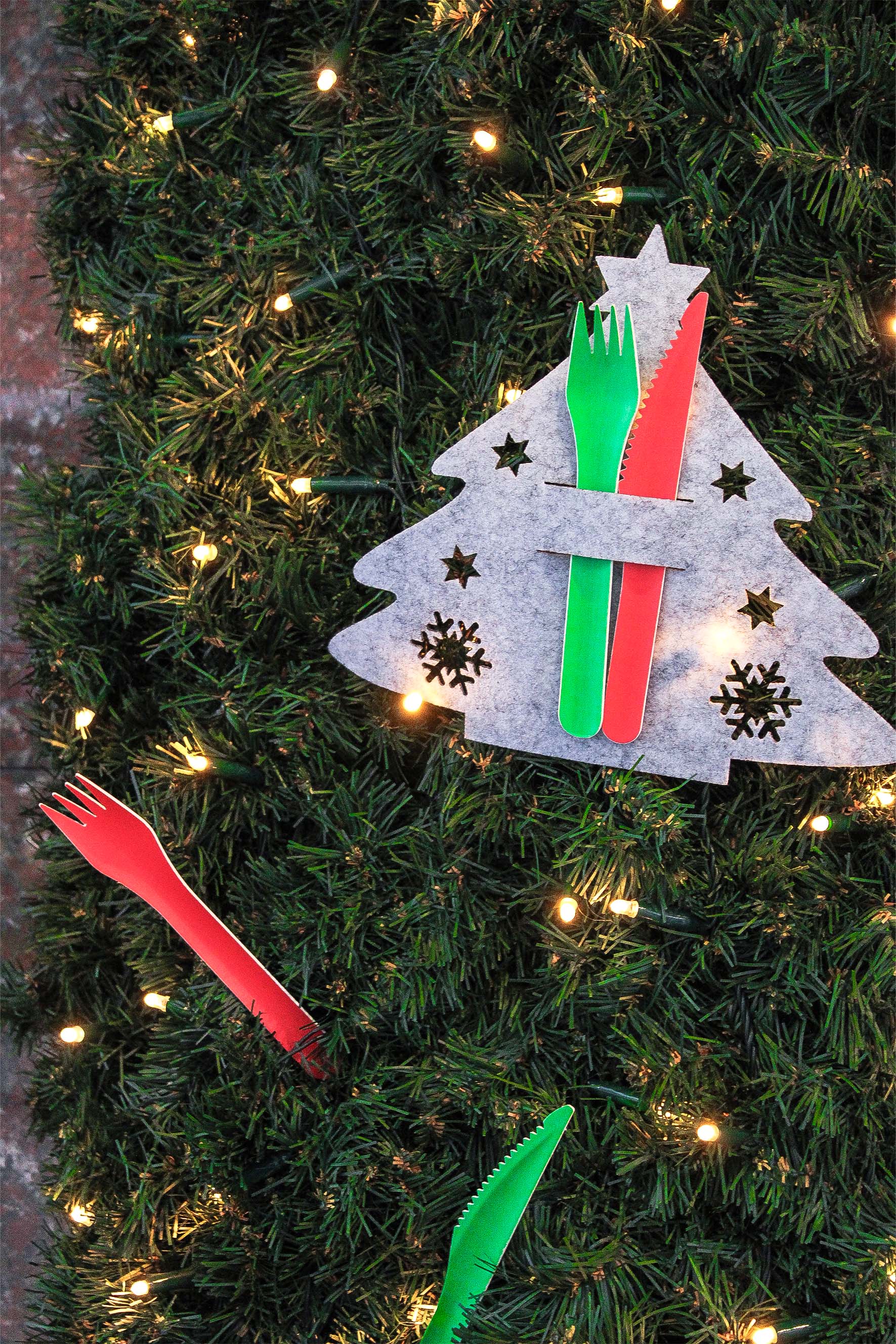
Parties mean cutlery, and lots of it. Paper cutlery and ready-made service sets take the fuss out of a busy service, so your team hands over a full set in one motion. For dishes like the two-piece fork slots together from flat parts, which keeps storage tidy and shipping light. Small details, but they add up over a busy December. Shipping flat also means less to transport for the same order, so a lighter load on the way to you.

Cups for the drinks table
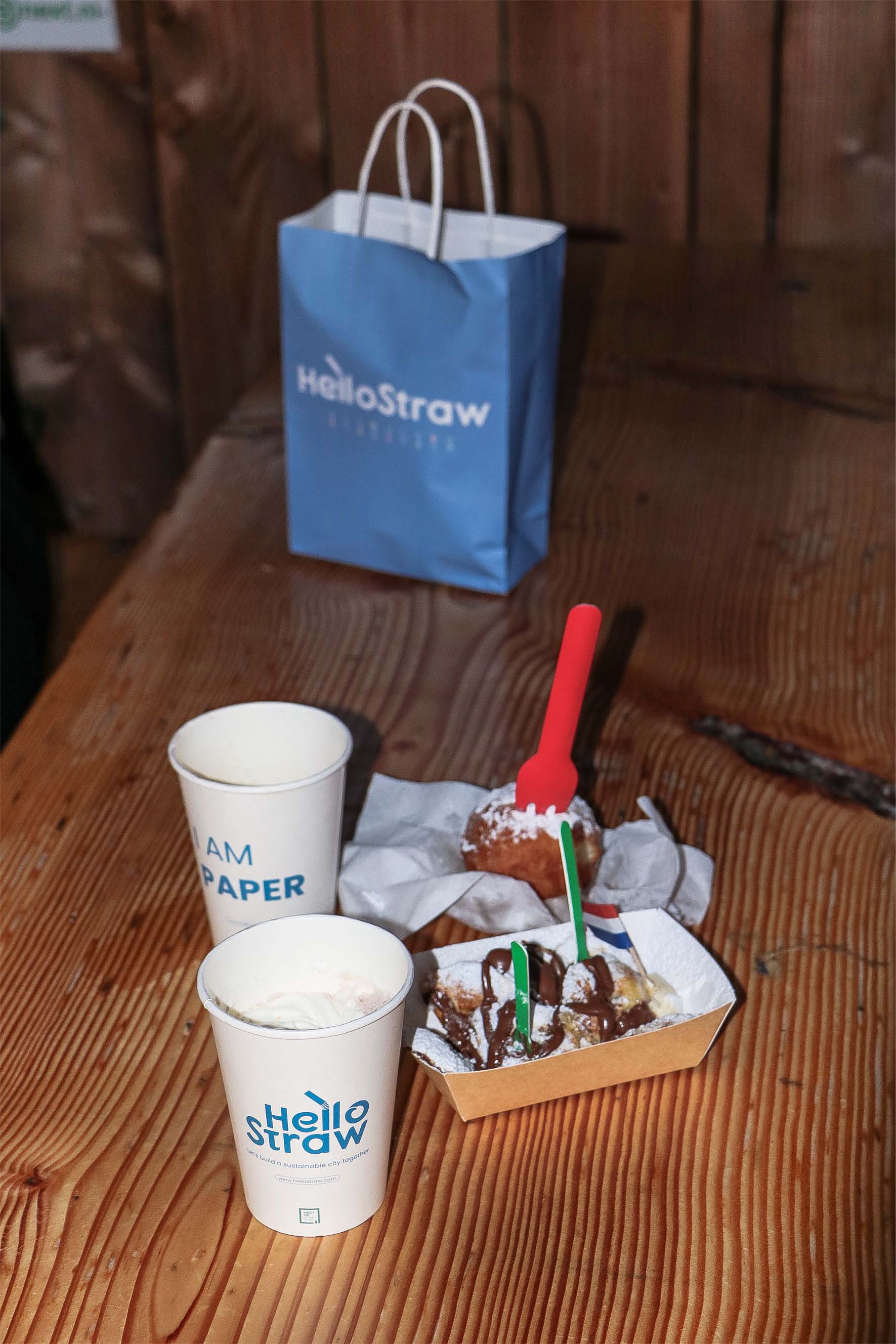
Drinks are part of the festive table too. Paper cups handle everything from mulled wine to hot chocolate, and a ripple-wall cup insulates well enough that a separate sleeve is usually not needed. The A-Cup, offered in a range of sizes, uses a water-based barrier and handles everything from hot drinks to cold, and spirits up to 45% ABV, not just beer. No sleeve means less material used on every cup, which is rather the point.
Straws for festive drinks
A paper straw is the easy swap for a plastic one, and it finishes a festive drink nicely. Alongside classic paper straws, the aseptic range is made to hold up in cartons and juice boxes, with shapes including the U-straw, an I-shape and telescopic straws. Where you want a mouthfeel closer to plastic, a premium paper is available on request, so the straw can match the drink. Across a whole festive season of drinks, each small swap keeps a lot of single-use plastic out.
Festive packaging sits on the right side of the rules
The rules around food packaging have been moving in a helpful direction. Two are worth knowing about as you plan.
The EU Packaging and Packaging Waste Regulation (PPWR) is steadily raising the bar on what packaging should be made from and how easily it can be recycled. Rather than a hurdle, think of it as the market catching up with what good suppliers already do. Paper-based packaging that is designed for recycling sits comfortably on the right side of it.
PFAS rules are the second piece. PFAS are the "forever chemicals" once used to make paper grease-resistant, and they are being phased out of food-contact packaging. Choosing packaging that is already PFAS-free means one less thing to revisit later.
For a buyer, the takeaway is simple. The choices that are better for the planet are also the choices that keep you ahead of the rules. You can build a festive range on these choices knowing it will keep standing up as the rules tighten.
How leading brands approach it
The names that get festive packaging right tend to treat it as part of the experience, not an afterthought. Brands such as Harrods, KFC and Star Alliance have chosen Hello Straw paper packaging to carry their food and drink, across settings as different as a department store, a quick-service counter and an airline cabin.
The same thinking shows up at high-volume events. Partnered with the caterer CrewFood, Hello Straw has kept the food service running at the World Gymnastics Championships, World Rowing Cup, and other major fixtures, where thousands of meals go out in a short window and the packaging has to perform every time.
The lesson for a festive range is reassuring. Packaging that is better for the planet is already serving some of the most demanding operations around, so you are not trading away quality to make a greener choice.
Frequently Asked Questions
What is sustainable Christmas packaging?
It is festive packaging made mostly from renewable paper and board, free from PFAS, and designed to be recycled or recovered through the systems your customers already use. The aim is to cut single-use plastic while keeping the food safe and the brand looking good.
Is paper packaging recyclable?
Yes. Paper-based packaging is widely accepted in paper recycling. A well-made paper box or cup is designed so the fibre can be recovered cleanly, even where a thin barrier is needed to hold liquid or grease.
How do we make our festive packaging PFAS-free?
Choose packaging that is already made without PFAS, and ask your supplier to confirm it in writing. It is the simplest way to stay on the right side of the rules and to reassure your own customers.
Can one supplier cover our whole festive range?
Often, yes. Sourcing food boxes, cutlery, takeaway and drinks packaging from one place keeps your branding consistent and makes ordering simpler, which is a real help in a busy season.