

The short answer
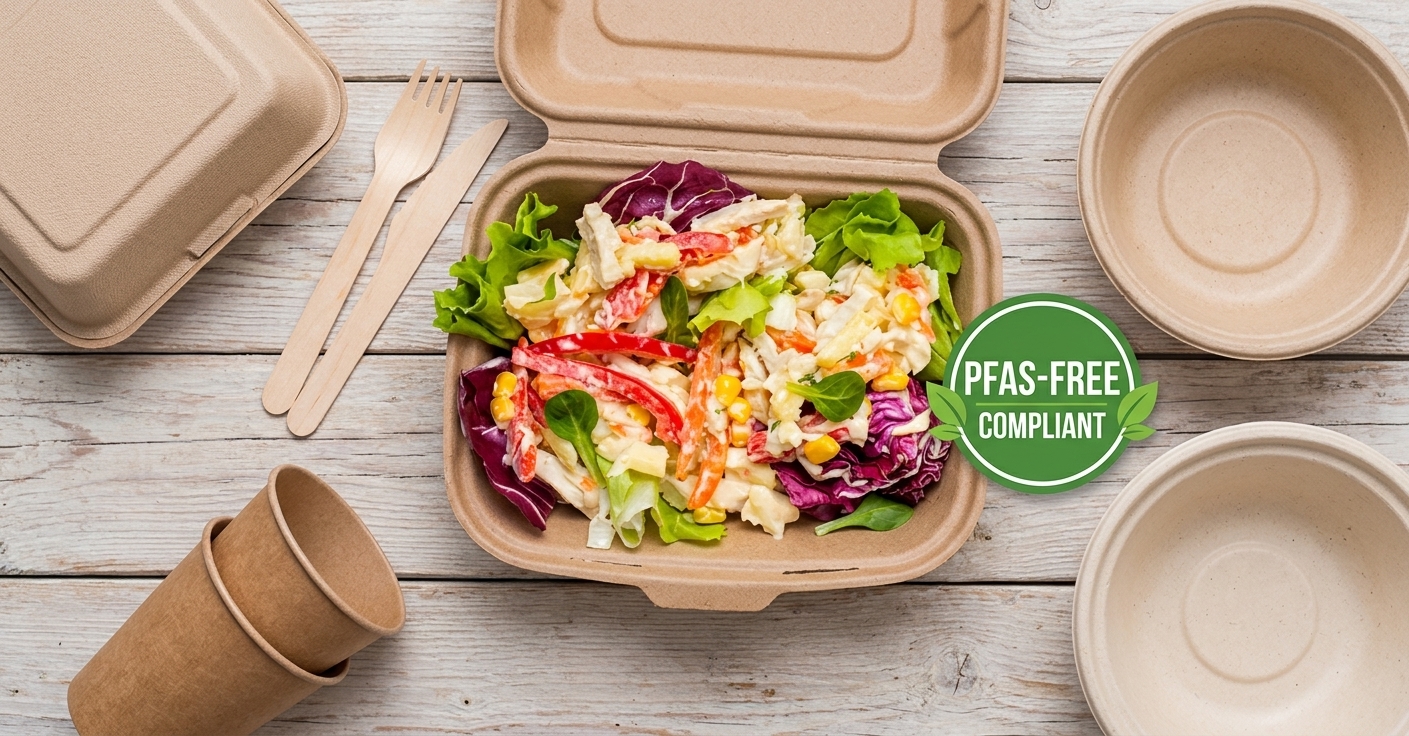
Since 12 August 2026, food contact packaging placed on the EU market must stay within strict PFAS limits under the Packaging and Packaging Waste Regulation (PPWR). The limits are low enough that any deliberate PFAS treatment of paper or board will not pass.
The reassuring part: proven paper based alternatives already meet the rule, so most brands can switch without losing performance.
What changed, and when
PFAS, sometimes called forever chemicals, were used for years to help paper and board resist grease and moisture. The PPWR (Regulation (EU) 2025/40) now sets maximum PFAS levels for food contact packaging through Article 5(5), and these have applied since 12 August 2026.
To be precise, the rule is not a flat ban. It sets concentration limits. In practice those limits are so low that any intentional PFAS coating has to go, so for most brands the effect is the same.
PFAS is one part of a wider set of PPWR duties. For the full picture across heavy metals, the Declaration of Conformity, recyclability and labelling, see our PPWR compliance guide for packaging buyers. This article stays focused on the PFAS limits and what meets them.
The three limits, explained simply
From 12 August 2026, food contact packaging may not be placed on the EU market if its PFAS content reaches any of these levels.
There is a helpful shortcut too. If a material's total fluorine sits below 50 mg/kg, it is treated as compliant with no further testing. A good supplier keeps this evidence ready in their technical file.
PFAS coatings and the alternatives, side by side
Does this apply to the UK?
This is the question UK brands ask first, and the answer is clear. The PPWR applies to packaging placed on the EU market, whoever makes or sells it. So a UK business shipping food or drink into the EU needs its EU bound packaging to meet the limits. Within Great Britain there is not yet a single matching rule, but the direction is similar and PFAS in food packaging is under active review. Many brands hold one compliant standard across both markets to keep things simple.
Where PFAS tends to hide
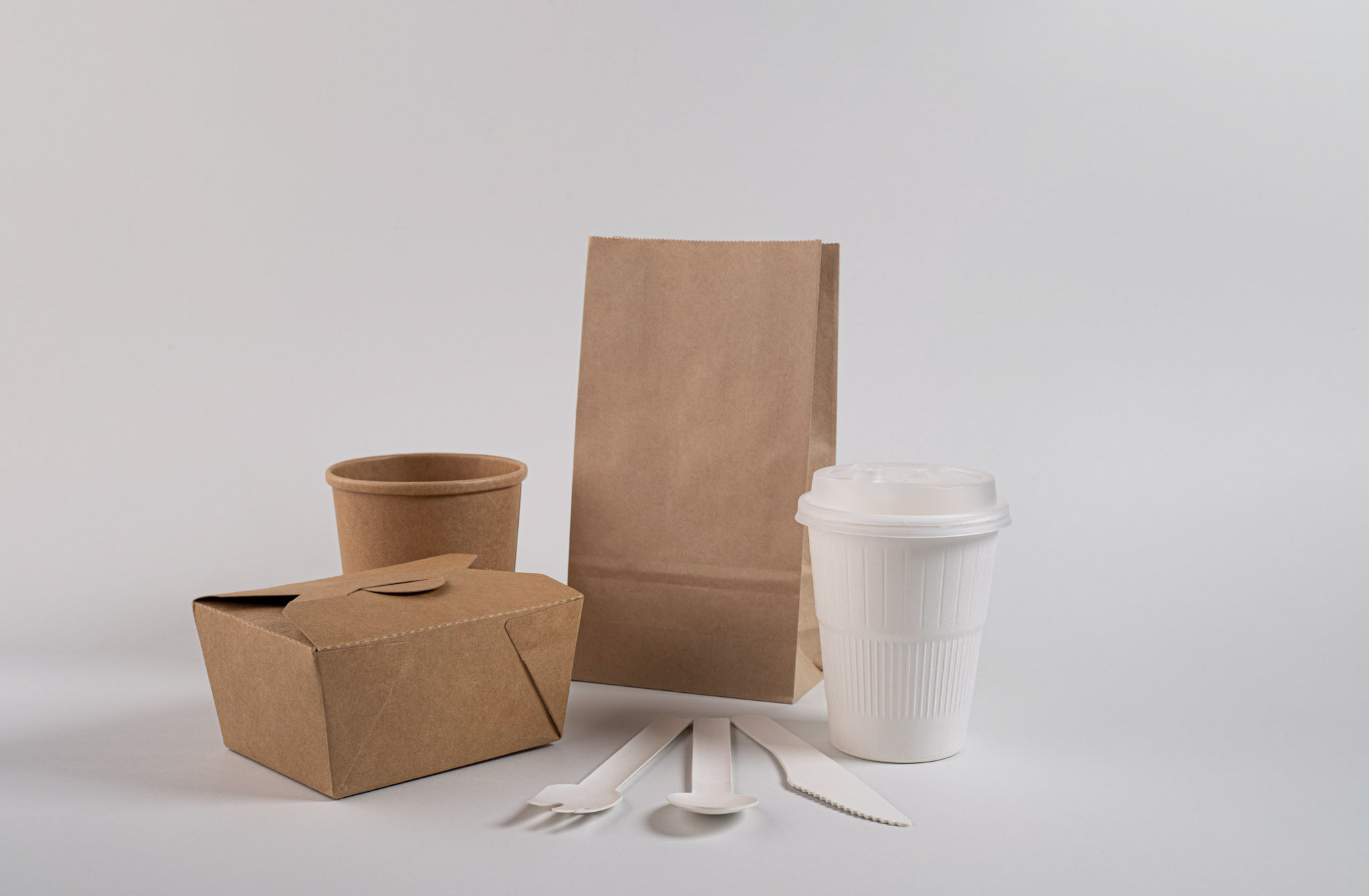
PFAS rarely show on a label, so it helps to know where they were used. They gave paper a barrier against grease and moisture, which points to a few common places:
- Grease resistant papers for fast food, bakery items and fatty foods
- Moisture or oil barriers on takeaway boxes and food trays
- Some coatings and laminates on paper cups and board
Plain, uncoated paper and board are very unlikely to carry PFAS. The risk sits mainly with barrier treatments, so that is where to focus your checks.
The alternatives that meet the rules
Packaging that performs well without PFAS already exists and is widely used. Two approaches do most of the work. Water based dispersion coatings give paper a barrier using water based materials rather than fluorinated chemicals, and keep the paper recyclable. Mechanical paper barriers build the resistance into the paper itself, so the pack performs with no PFAS coating at all.
At Hello Straw, our A-Cup and food boxes use a plant based, water based barrier coating, around 0.6% by weight and free of fluorinated chemicals. See the paper range or request a sample kit
Your checklist for PFAS confidence
Frequently Asked Questions
Does the PPWR ban PFAS outright?
Not as a flat ban. It sets maximum PFAS levels so low that deliberate PFAS treatment of food packaging will not pass.
What are the PFAS limits for food packaging?
25 ppb for any single PFAS, 250 ppb for the total, and 50 ppm for total PFAS including polymer types.
Does the PPWR apply to the UK?
For packaging that reaches the EU or Northern Ireland market, yes, wherever your business is based. For GB only ranges it does not apply directly, though many brands align anyway to keep one standard.
What can I use instead of PFAS coatings?
Water based dispersion coatings and mechanical paper barriers are the two main routes, both suitable for food contact.


